Recipes
Here you can find some dishes to make! These dishes are meant to be the first steps into your cooking journey. Nothing difficult, overwhelming, or expensive to make. Photos of each dish is in the 'History of the Dishes' section!
wait! what's the history of these dishes?Cucumber Salad
Here is the original recipe. Don't be shy to make your own modifications to this side dish. It's spicy and a bit of sweet!
Ingredients
- 1 cucumber
- 3/4 teaspoon salt, or to taste
- 2 cloves garlic, minced (I used more because I love garlic)
- 1 teaspoon apple cider vinegar
- 1 1/2 tablespoons sugar
- 1 teaspoon chili powder
- 1 teaspoon chili oil
- 1/2 teaspoon sesame oil
- sesame seeds, for garnishing!
Instructions
- Rinse the cucumber and slice it. Cut the slice in half if you want it more bite size!
- Add salt to the cucumber (to draw out the excess water! we want crispy cucumbers.) Stir gently and let it sit in the fridge for 15 minutes. Drain the water after.
- Now in a separate container, add the minced garlic, vinegar, sugar, chili powder, chili oil, and sesame oil together! Stir well and make sure the sugar is dissolved.
- Add the mixture to the sauce and toss!
- Top with sesame seeds (as a garnish) and ENJOY!
Tomato & Egg Stir-fry
Here's the original recipe. This recipe has more steps than the cucumber salad but don't be discouraged. The original creator has a feature on his website that adjusts to how many servings you want to make. The recipe I'm showing here will be for 2 servings. This dish is a tad sweet so if that doesn't sound appealing to you, I recommend not putting in the brown sugar (but it does combat the acidity of the tomatoes!)
Ingredients
- 2 tomatoes (I used Roma)
- 2 eggs
- 2 1/2 sliced ginger
- 1/2 tablespoon cornstarch (for slurry)
- 2 tablespoons water (for slurry)
- 1 tablespoon oil
- 1 1/2 tablespoon water
- 1/4 teaspoon salt (for eggs)
- 1/4 teaspoon salt (for stiry fry)
- 1 tablespoon brown sugar (for stir-fry)
- 1 tablespoon ketchip (for stirfry)
Instructions
- OPTIONAL STEP: peeling the tomatoes. This is up to personal preference! If you don't want the tomato skin on then start boiling water (just enough to submerge the tomatoes). As the water is heating up, score the tomatoes surface with an X. Place in a bowl. Once the water is ready, pour the boiling water over the tomatoes and let sit for 2 minutes. After the time is up, they should peel right off!
- Cut each tomato in quarters (don't forget to remove the stem).
- Cut 2 1/2 thin slices of ginger, and then julienne (long, thin, uniform strips).
- Crack your eggs in a bowl and prepare them like you're making scrambled eggs.
- In a small bowl, add constarch and water (this combo helps thicken the sauce!)
- Add some oil and cook those eggs at high heat! When they're mostly cooked, tranfer them to a temporary bowl/plate. Season them however you'd like!
- Add some more oil to the hot pan. Add the ginger and tomato wedges! Stir-fry for 30 seconds THEN add (1 1/2 tablesoons) water.
- While the tomatoes cook, season with salt and brown sugar. Continue cooking for 2 and a half minutes. Slowly pour the cornstarch slurry into the pan.
- Add the eggs back into the pan! Stir and cook for 1 minute, then turn off the heat (to prevent overcooking). Add the ketchup and mix!
- ENJOY! Most commonly served with rice.
Crab Rangoon
I used this video's recipe for the crab rangoons, and I made sweet and sour sauce with this recipe. This recipe was simple, easy, extremely delicious, and a great way to bring friends and family together. The original creator mentioned making rangoons in an air fryer but I fried mine in oil. Cooking in the air fryer resulted in a dry egg roll. I will be providing instructions for oil frying + the sweet and sour sauce.
Ingredients
- 8 ounce cream cheese (room temp)
- 4 - 6 sticks of imitation crab, cut in half and shredded
- wonton wrappers
- 2 - 3 stalks of green onions, thinly sliced
- 1 teaspoon soy sauce
- 1/2 teaspoon rice vinegar (or worcestershire sauce)
- 1/4 teaspoon garlic powder
- 1/8 teaspoon white sugar
- 1/8 teaspoon white pepper
- frying oil (I used vegetable oil)
- water (for sealing your wonton wrappers)
- 3/4 cup of white sugar
- 2/3 cup water
- 1/3 white vinegar
- 1/4 cup soy sauce
- 2 tablespoon cornstarch
- 1 tablespoon ketchup
Sweet and Sour sauce
Instructions
- In a large bowl bowl, combine the cream cheese block, shredded imitation crab, green onions, soy sauce, rice vinegar, garlic powder, sugar and white pepper. Mix together with a fork until all evenly combined. Set aside!
- Get the wonton wrappers ready and some water ready in a small bowl.
- Take one wrapper and spoon roughly 1 tablespoon of the mixture in the center (I eyeballed it).
- Dip your finger in the water and trace along every side of the wrapper. Now you can wrap it like the triangle shape OR the traditional way (the 4-point star). To do the 4-point star, fold the opposite corners (across diagonally) together and pinch the wrapper to seal. For the triangle, fold one side diagonally then pinch to seal! (Make sure it's completely sealed so the filling doesn't come out and hot oil doesn't get inside).
- Heat enough frying oil to cover the crab rangoons to 350° (My stovetop was between 4 and 5). Fry for 4 to 6 minutes or until golden brown. Let cool!
- Serve with sweet and sour sauce, soy sauce, or alone. ENJOY!!
- Add sugar, water, vinegar, soy sauce, cornstarch, and ketchup in a medium saucepan or pot.
- Bring it to a boil. Stir continously until it's thickened.
- Enjoy!!
Sweet and Sour sauce
Egg Roll
I used this video's recipe. It's a simple recipe, just a lot of prep work. I thoroughly enjoyed wrapping the egg rolls.
Ingredients
- 1/2 lb ground meat (I used turkey)
- 3 cups cabbage, thinly sliced
- 2 large celery stalks, thinly sliced
- 1 medium carrot, shredded
- 1 small onion, diced
- 3 - 4 cloves of garlic, minced
- 1/4 teaspoon onion powder
- 1/4 teaspoon garlic powder
- 1/4 teaspoon salt
- 1/4 teaspoon ground white pepper
Instructions
- Prepare the vegetables.
- Grab a wok (or large pan), heat 2 tablespoons of oil (I used olive oil). Add the minced garlic and cook until fragrant. Add the ground meat and season with salt and pepper to taste.
- Add onions and cook until translucent and meat is cooked through.
- Turn the heat down medium - low (My stove was between 4 and 5). Add the cabbage, celery, and carrot. Season with onion powder, garlic powder, salt, and ground white pepper (I added MSG at this point). Cook for 2 - 3 minutes.
- Put all of the sautéed meat and veggies in a strainer over a bowl (too much juices will ruin the egg roll during frying). Let it cool.
- In a small bowl, mix some flour and water to make a sealing paste. Set aside.
- Time to wrap the egg rolls! I used this website as a reference!!
- Spoon about 2 tablespoons of the filling in the center. Fold accordingly. Make sure to keep it tight and use the paste to seal the top (or any loose edges).
- In a wok (or pot), heat oil (I used vegetable) to 350° (around medium heat). Fry egg rolls in small batches until golden brown. Strain the egg rolls and let cool.
- Serve with sweet and sour sauce. Enjoy!!
Hot and Sour Soup
I used this recipe. This will make around 4 servings. The original recipe didn't specify how much mushrooms to use so I measured 1/2 cup for both. For the veggies and tofu, I measured to my preference.
Ingredients
- 4 cups broth (I used vegetable)
- 1/2 cup woodear mushrooms, sliced
- 1/2 cup shiitake mushrooms, sliced
- 1/4 cup bamboo shoots, in strips
- 4 ounces tofu, strips (I used soft but the original recipe calls for firm)
- 1/2 teaspoon red chili powder or flakes
- 1/4 teaspoon white pepper
- 2 tablespoons soy sauce
- 1 teaspoon dark soy sauce (for color)
- 1/4 teaspoon sugar
- 2 tablespoons cornstarch
- 3 tablespoons water
- 2 eggs, whisked
- 2 tablespoons white vinegar
- 1/2 teaspoon sesame oil
- 1 green onion, sliced
Instructions
- Prepare everything that needs to be cut.
- Put the heat on high. Get a large pot and add the broth, vegetables, and seasonings.
- While you wait for it to boil, make your cornstarch slurry.
- Once boiling, pour the slurry in and stir.
- Now slowly pour in the eggs and stir to make ribbons.
- Finish with vinegar, sesame oil, and green onion.
- Serve and enjoy!
Steamed Fish
I used this recipe. This requires a bit of time with cutting the aromatics. The smell though makes it worthwhile. Cooking the fish is the easy part. The recipe I'm providing is for 2 servings.
Ingredients
- 2 scallions
- 2 tablespoons ginger
- 1 small bunch cilantro
- 1 1/2 tablespoon light soy sauce
- 1/8 teaspoon salt
- 1/8 teaspoon sugar
- 2 tablespoons hot water
- 10 ounce of delicate white fish (I used tilapia)
- 2 tablespoons vegetable oil
Instructions
- Cut the scallions into 2 inch pieces and cut in half lengthwise. Julienne them thinly. Separate the white parts from the green. Thinly slice the ginger and julienne them. Roughly chop the cilantro. Set everything aside.
- Combine the light soy sauce, salt, sugar and hot water in a small bowl. Mix until the salt and sugar are dissolved. Set aside.
- Prepare your steam set-up and fill with a couple inches of water. Bring to a boil.
- Rinse your fish fillet (this is optional), and place it in the steaming setup. Lower the heat to medium. Enough for the water to generate a good amount of steam, but not so high that the water evaporates too quickly. (you can always fill it with more water)
- Cover and steam until the fish fillet is cooked through. Internal temp for cooked tilapia is 145°.
- Turn off the heat and carefully drain any liquid. Spread about 1/3 of the scallions, ginger, and cilantro on the steamed fish.
- To make the sauce, heat a wok or small saucepan on medium high heat. Add 2 tablespoons of vegetable oil. Add the remaining 2/3 ginger, and fry for a minute. Add the white parts and fry for 30 more seconds. Then add the rest of the scallions and cilantro. The mixture should be sizzling.
- Add the soy sauce. Bring the sauce to a bubble, and cook until the scallions and cilantro are wilted.
- Pour this sauce over the fish.
- Serve and enjoy!!
Mapo Tofu
I used this recipe. This dish is SPICY! The scent and flavor is amazing but I definitely will be using less peppers. This requires some time for prep.
Ingredients
- 1/2 cup oil (divided)
- 1 - 2 fresh thai bird chili peppers (thinly sliced)
- 6 - 8 dried red chilies (roughly chopped)
- 1/2 to 1 1/2 tablespoons sichuan peppercorns (powdered or finely grounded)
- 3 tablespoons ginger (finely minced)
- 3 tablespoon garlic (finely minced)
- 8 ounces pork (I used turkey but I'd advise to use meat that's fatty to combat the spice)
- 1 - 2 tablespoons spicy bean sauce
- 2/3 cup (low) sodium chicken broth
- 1 pound (16 ounces) silken tofu (cut into 1 inch cubes)
- 1/4 cup water
- 1 1/2 teaspoons cornstarch
- 1 scallion (finely chopped)
- 1/4 teaspoon sesame oil (optional)
- 1/4 teaspoon sugar (optional)
Instructions
- First, toast the chilies. Heat your wok (or small saucepan) over low heat. Add half of the oil and throw in both the fresh and dried peppers. Stir occasionally and heat until fragrant, ensuring that the peppers don't burn. Pour into a separate bowl and set aside.
- Heat the remaining half of the oil in the wok over medium heat. Add the ginger. After 1 minute, add the garlic. Fry for another minute, and then turn the heat up to high and add the ground meat. Break up the meat and fry until it's cooked through. Add the ground Sichuan peppercorns and stir for 15 - 30 seconds, making sure it doesn't burn (it will be bitter if it does).
- Add the spicy bean sauce to the mixture and stir well. Pour the chicken broth in and stir. Let this simmer for a minute or so. While that's happening, combine the water and cornstarch in a small bowl.
- Add the cornstarch slurry to the wok and stir. Let the sauce thicken.
- Add the chili oil from before (with the peppers!) Stir the oil into the sauce, and add the tofu. Gently toss the tofu in the sauce. Let it cook for 3 - 5 minutes. Add the sesame oil and sugar (if using) along with the scallions and stir.
- Serve with a sprinkle of Sichuan peppercorn powder as a garnish if you'd like.
History Of The Dishes
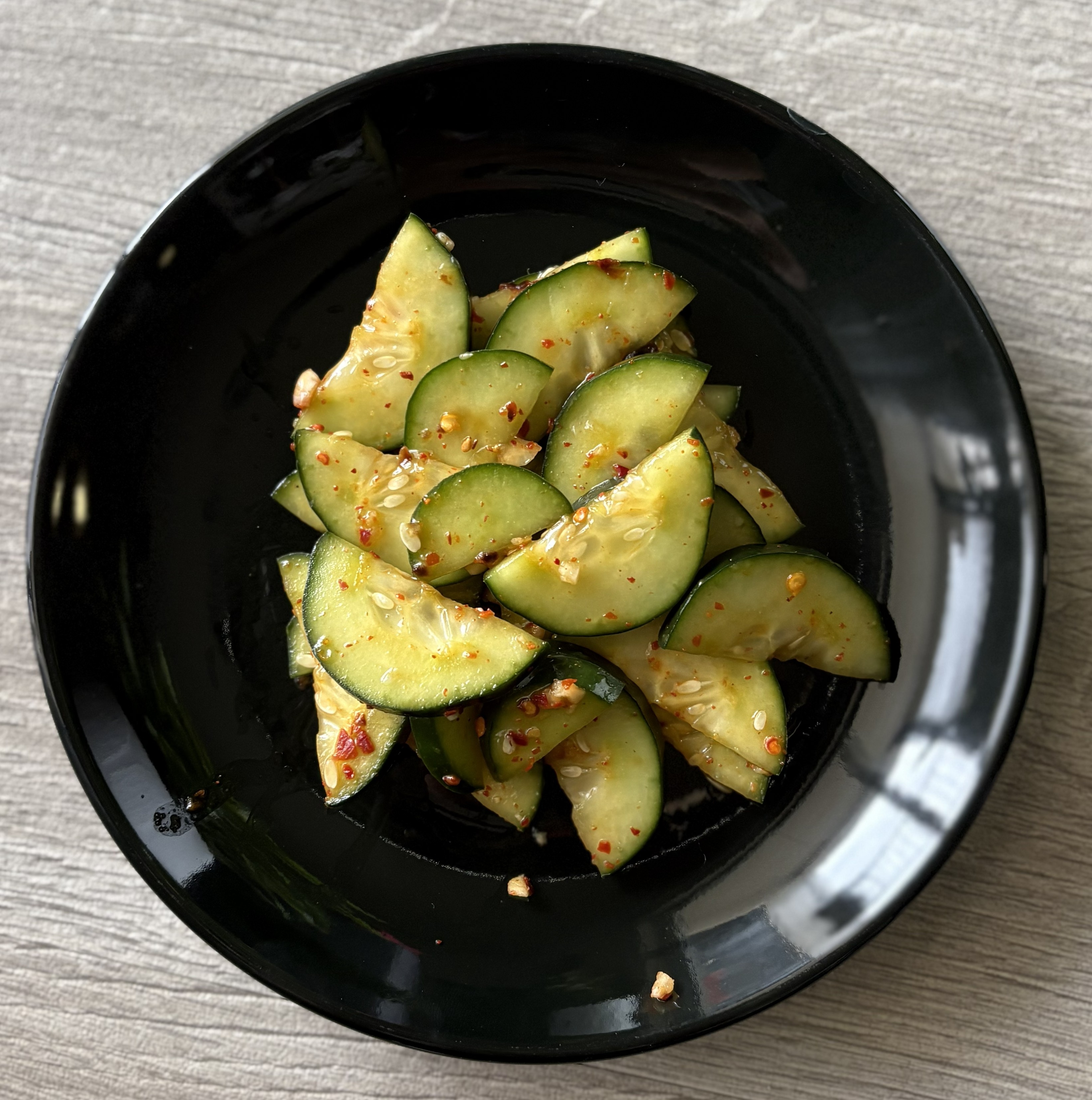
Cucumber Salad
A classic dish originating from Sichuan province. There are two names for the dish. Pai Huang Gua which translates to smashed cucumber and Liang Ban Huang Gua which translates to cold-tossed cucumber. There's no single named creator. References date back to the early 1900s. It's historically used as a cooling Summer dish. Thought to clear heat and eliminate toxins.
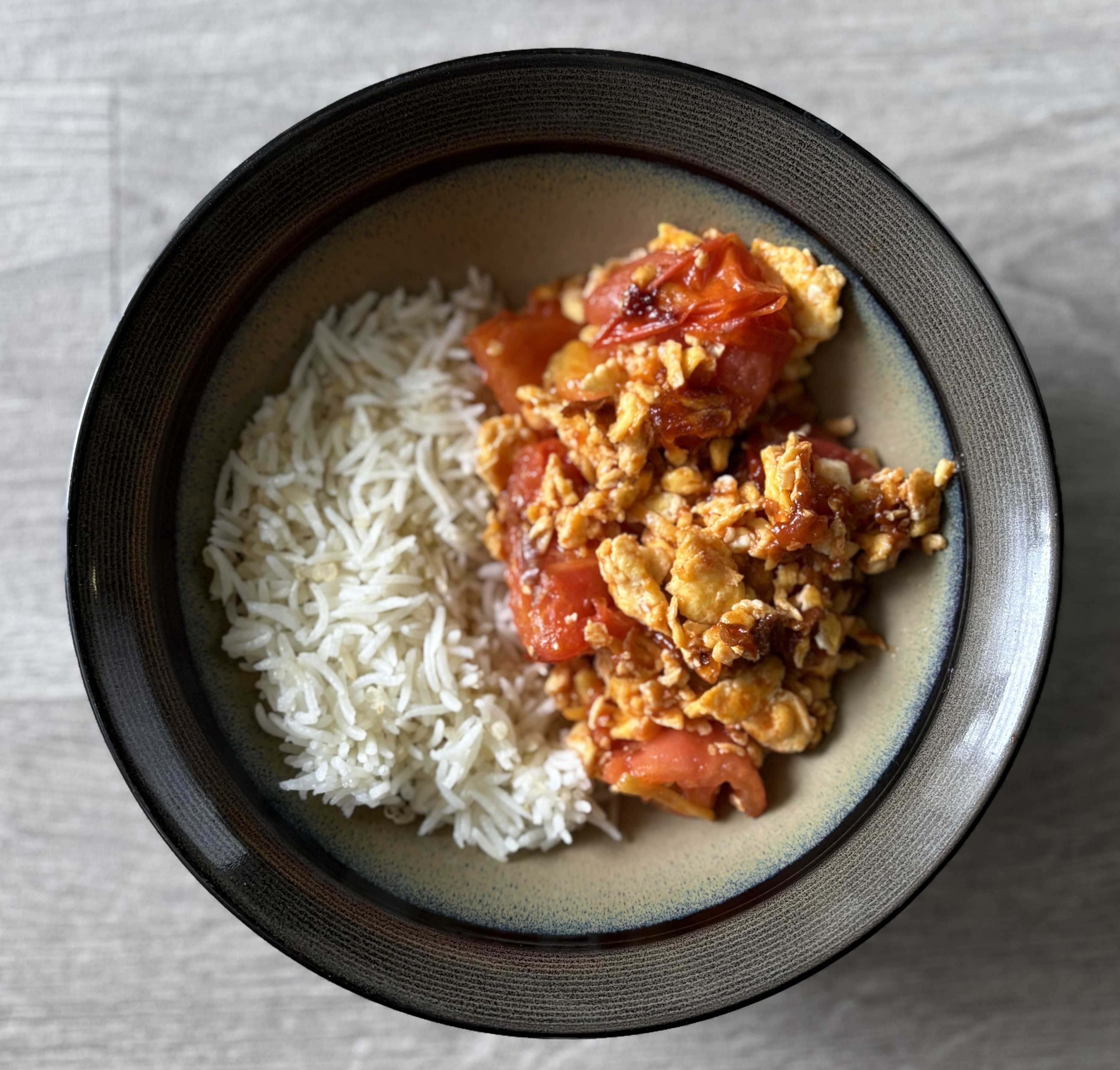
Tomato & Egg Stir-fry
A fusion dish considered to be a staple of Chinese home-cooking since the 1940s. There is no single named creator. Western restaurants using tomatoes in their cuisine began to appear in China during the late Qing Dynasty (roughly 1840s - 1912) and early Republican era (1912 - 1927), which influenced China to experiment with tomatoes. Eating scrambled eggs was normal in China but cooking them with tomatoes is a mix of Chinese and Western cuisine. Often served over rice and served for lunch, dinner, and quick breakfasts.

Crab Rangoon
A popular Chinese American invention! It's thought to be invented in the 1940s or 50s by Joe Young at Trader Vic's, a Polynesian-style restaurant in California. It was invented to be an exotic appetizer. Some people think the first crab rangoon debuted at St. Louis World's Fair in 1904 but there's no specfic documentation. Named after the former name of the city of Yangon in Myanmar (Between Bangladesh and Thailand and Laos).

Egg Roll
The origins of this dish are unclear and remains a debate, but they're very similar to, yet distinct from the Spring Rolls which are served in mainland China. The main differences between the two are the wrapper and origin. Springs rolls are covered in a thin wrapper and originated in Shanghai, China. Meanwhile, Egg rolls are wrapped in a thick wrapper and thought to have originated in New York's Chinatown in the 1930s. Another popular Chinese American invention!

Hot and Sour Soup
This dish is thought to have originated from Sichuan province but many culinary historians and experts suggest that it's a variant or close relative to Hulatang. This dish originates from Henan province. It was tradiationally created as a medicinal, warming dish - to warm the body, improve appetie, and serve as a nutritious breakfast for laborers. The exact origin for Hulatang is unkown but since the pepper, the main ingredient of the soup, wasn't introduced to China until the Tang Dynasty (618 - 907 A.D.) It's considered to have developed significantly during the Song Dynasty (960 - 1279).
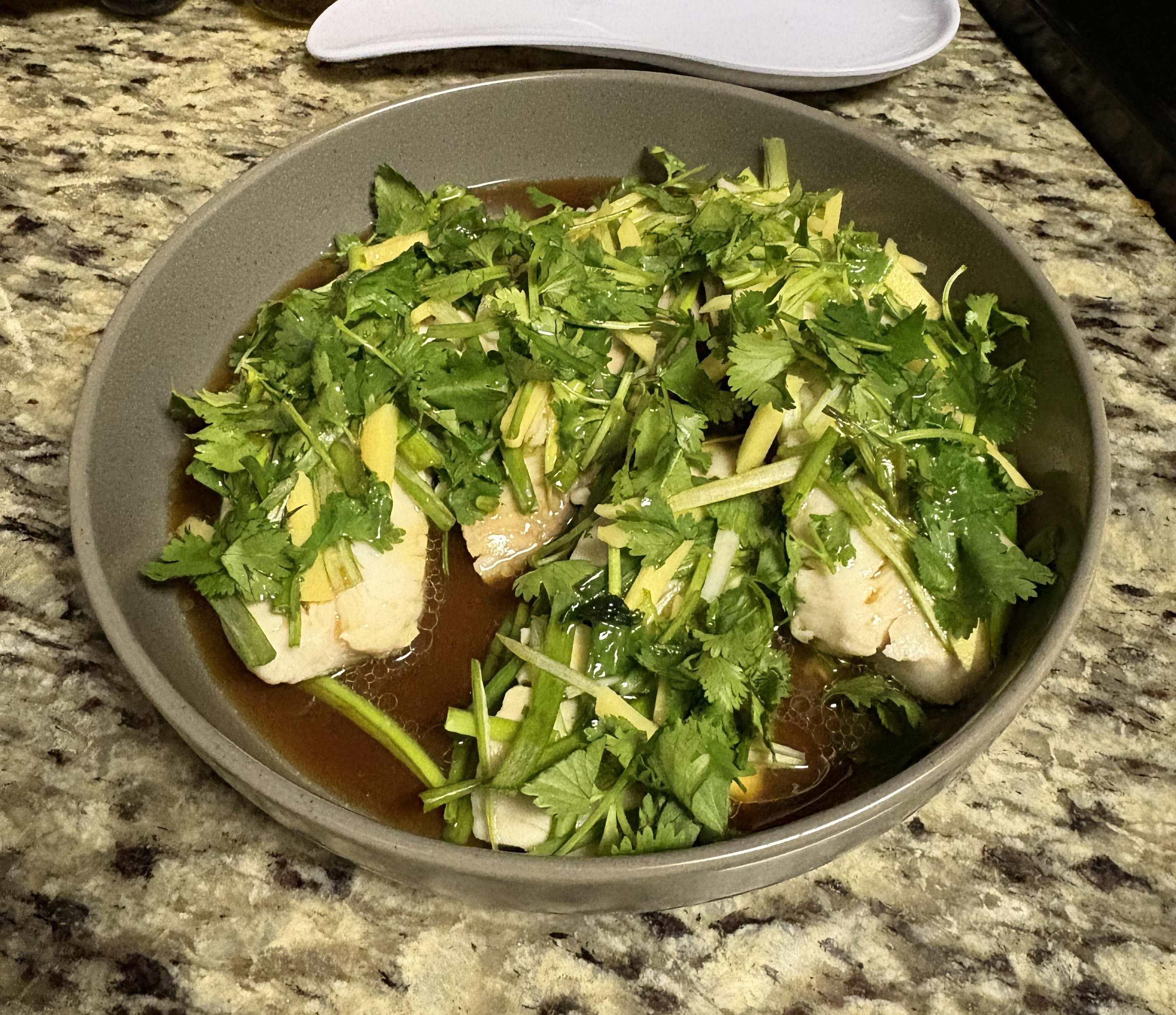
Steamed Fish
A fundamental, ancient Chinese dish. There is no single named creator for this dish. The steaming techniques date back to 5,000 BCE in the Yellow River Valley (located in northern China). A staple of Cantonese cuisine. The dish symbolizes abundance and prosperity - a quintessential dish served during Chinese New Year and other special occasions. In Chinese culinary tradition, steaming is considered the best method for the freshest fish, and aims for a delicate texture.

Mapo Tofu
This dish originated at a Chengdu restaurant (located in the Sichuan province) in the 1860s - 1870s (late Qing dynasty) by Mrs. Chen. Fun fact: the dish is named after her (she had pockmarks on her face and people gave her the nickname Mapo)! Mapo Tofu loosely translates to "pockmarked old woman's tofu". Most customers were carriers who brought oil from Xinfan (a city closeby) to Chengdu and stopped at the restaurant to rest during their trip. The restaurant catered to laborers and travelers.
Resources for Adoptees
Here you'll find websites that aim to help specifically Chinese adoptees. Many of them include searching for bio families, community, and blogs.
Chinese Adoptee Alliance
A nonprofit organization supporting chinese adoptees and allies by serving the chinese adoptee community and global community of adoptees and allies. Founded in Manhattan in the early 1900s as a parent support group.
China's Children International
A global community created by and for Chinese adoptees. CCI connects and empowers adoptees through inclusive support and shared experience. Hosts online events.
Nanchang Project
Their mission is to reconnect Chinese adoptees worldwide with their roots in China, supporting their search for birth families, origins, and identity.
Research China
They research China’s international adoption program to not just get facts but also move toward finding the true history of every child adopted from China. The premier organization for obtaining information about the histories of children adopted from China.
ICSA China
They offer a central source of information to help adoptees search for their birth families. They promote awareness in China of adoptees’ desire to know their birth families and the importance of DNA testing, primarily through province search posters shared widely on Chinese social media.
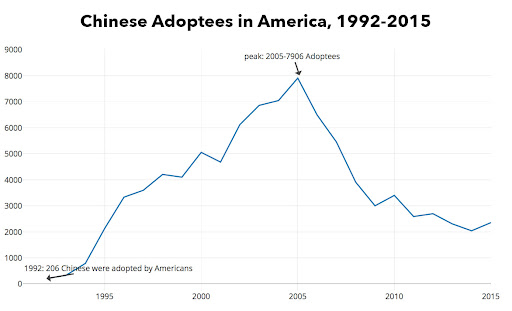
China's One Child Policy officially began in 1979 and ended on January 1, 2016. Since then, China's population has declined due to the fertility rate decreasing. The government eventually ended all limits on how many children couples can have and has introduced financial encouragement to raise the birth rate.
About Me
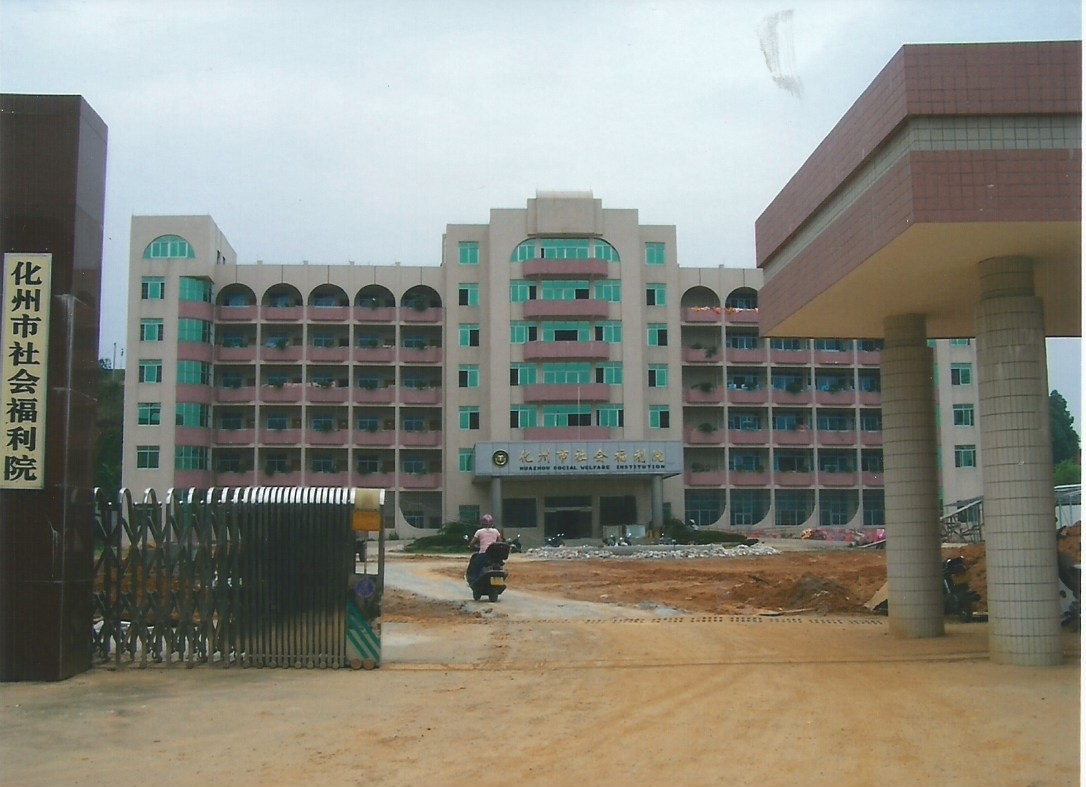
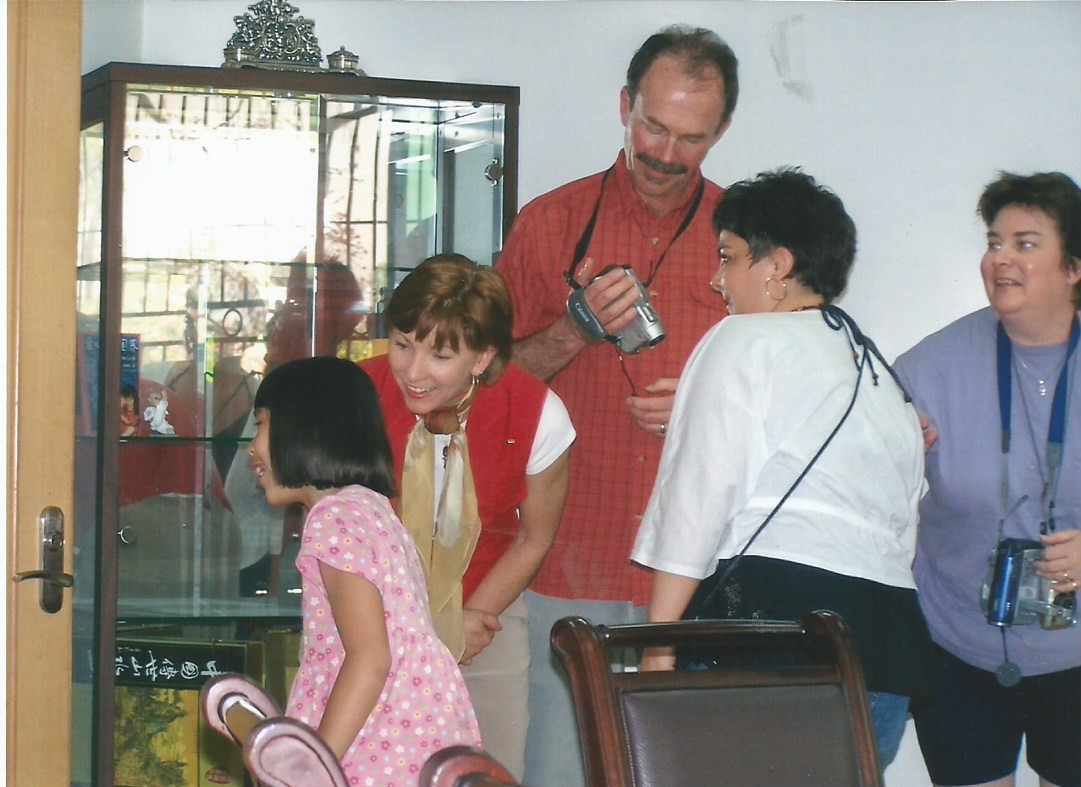
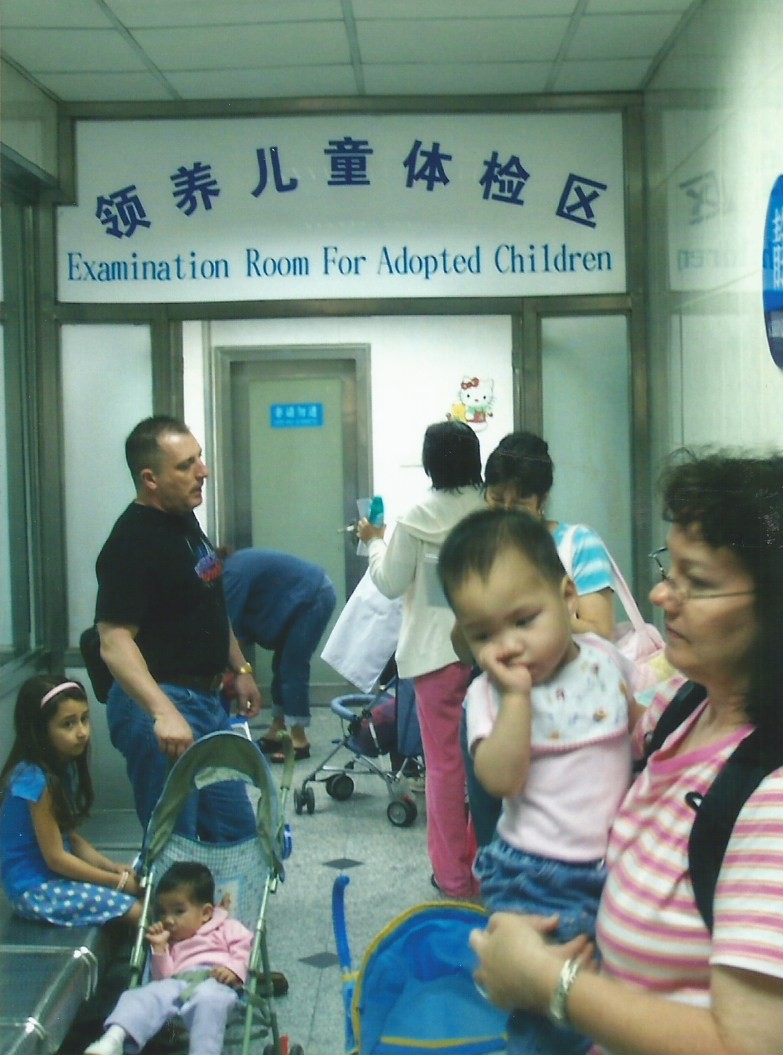
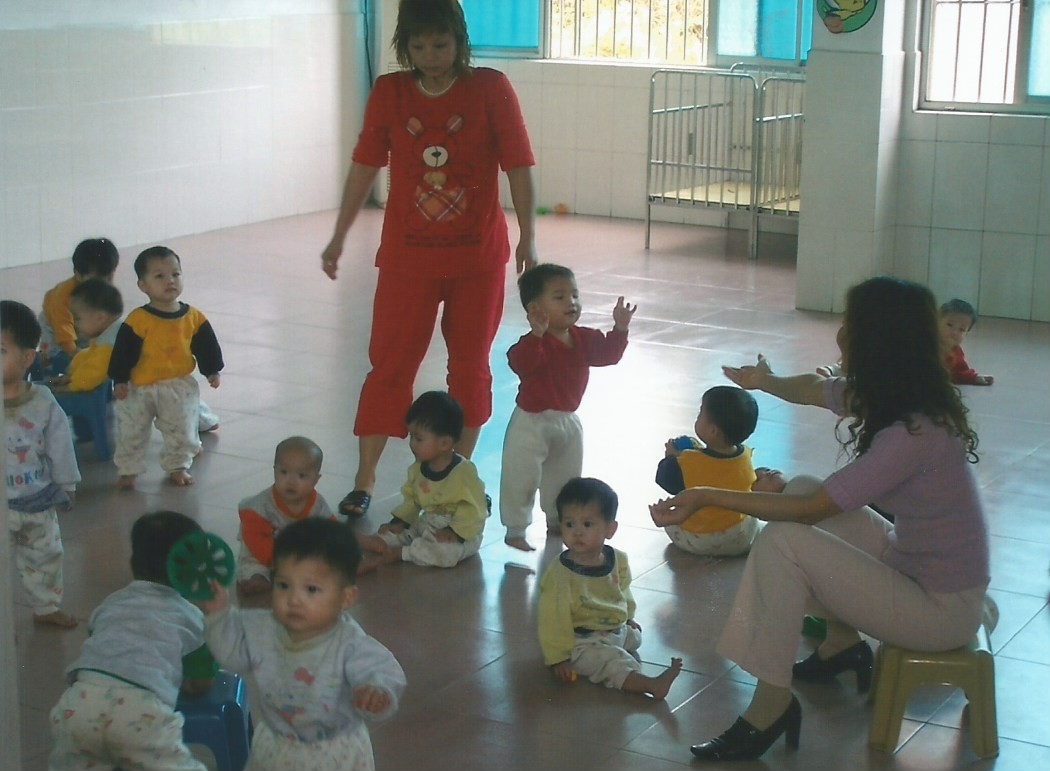
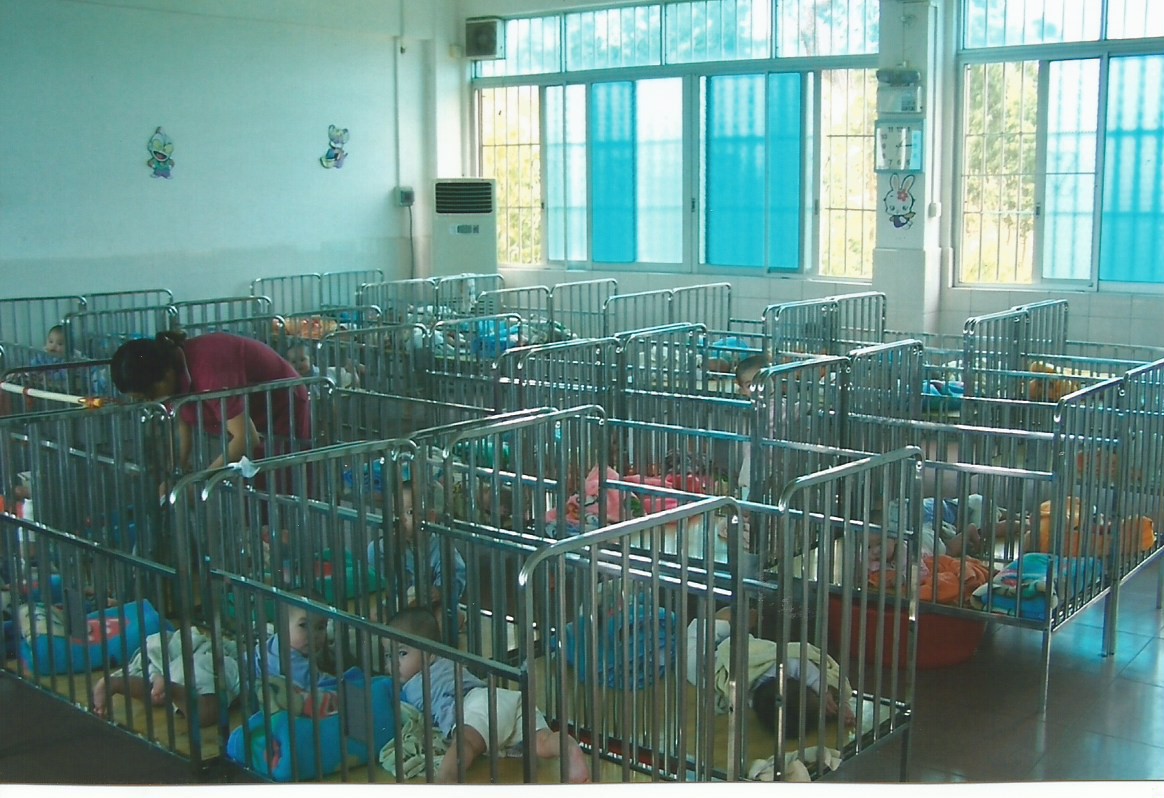
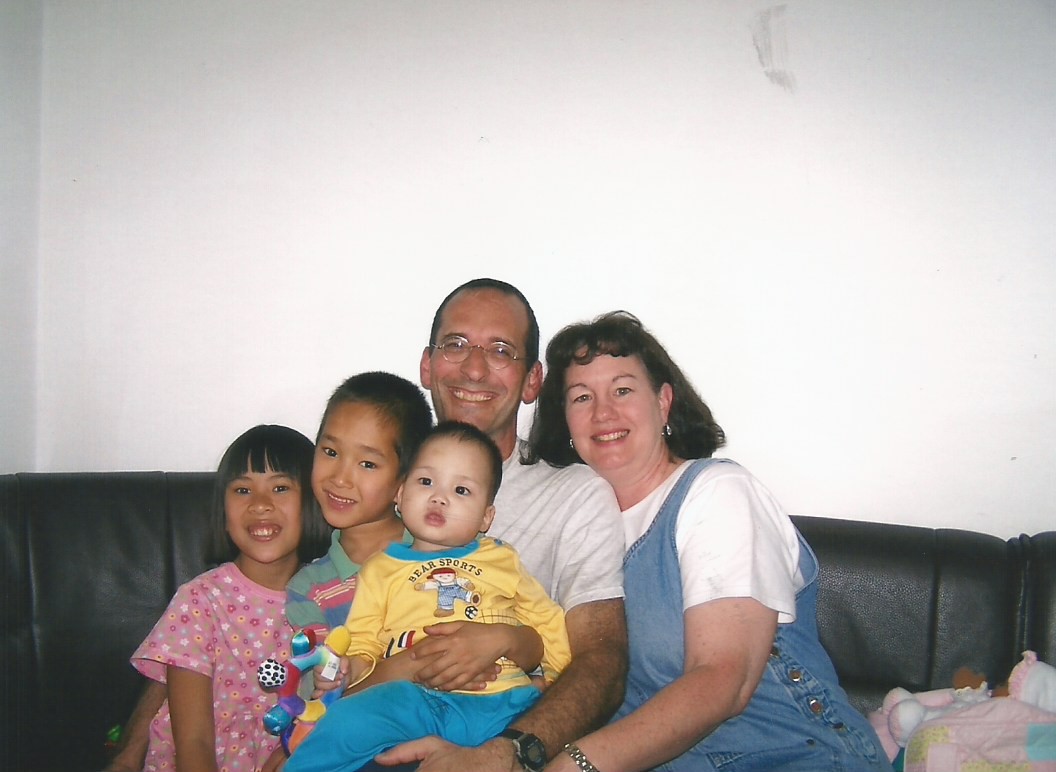
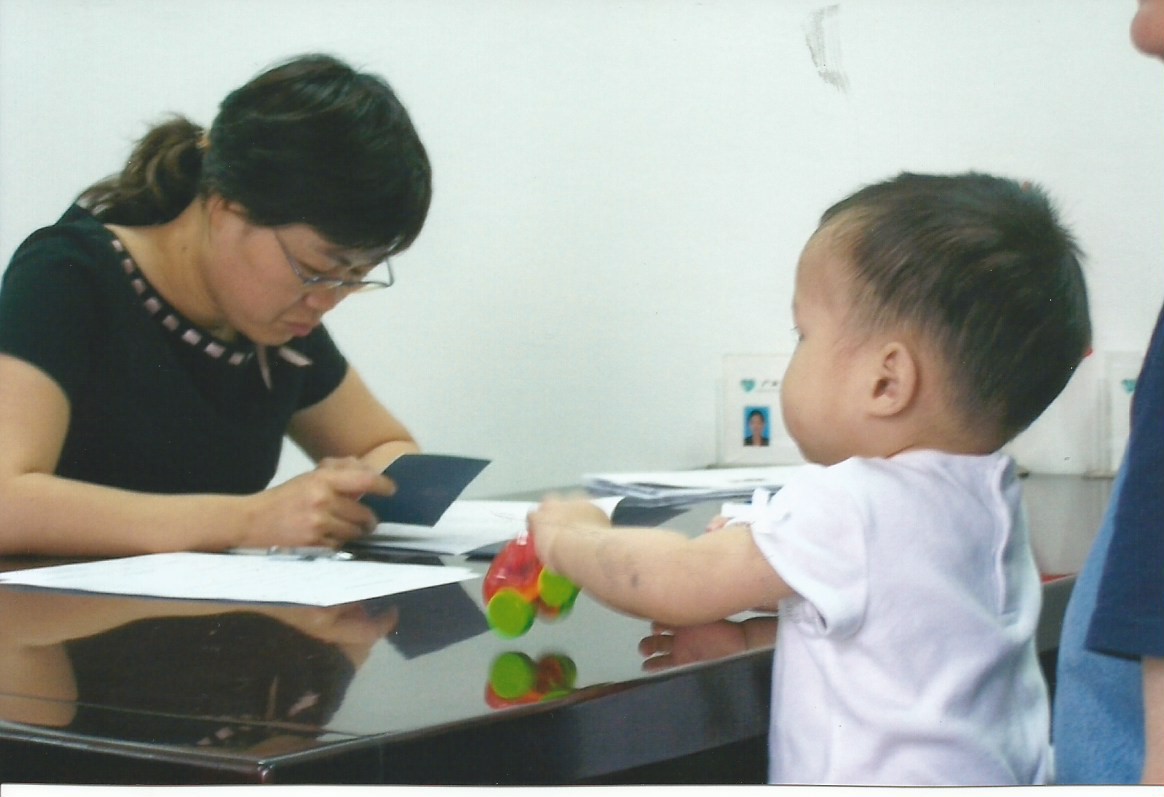
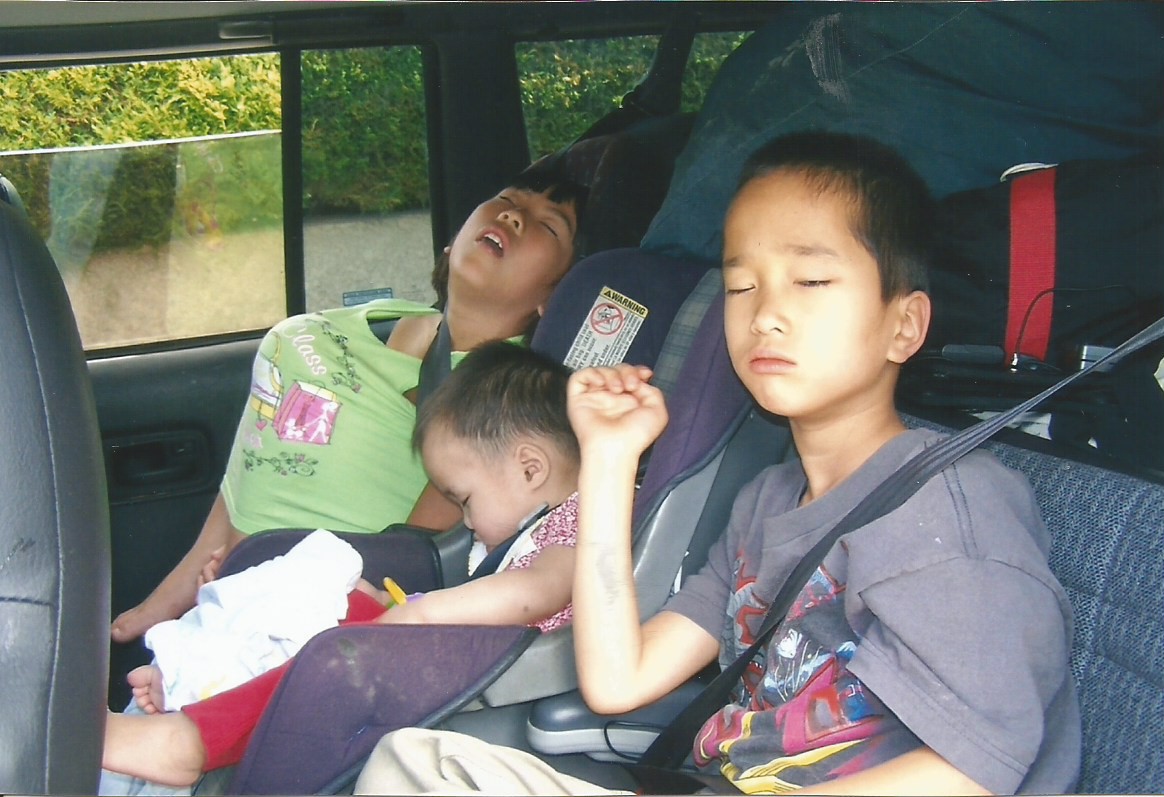
I was found abandoned outside the gate of the Board of Health, Huazhou City, on September 27, 2004. I was sent to the welfare institute by the Hexi Police Station, Public Security Bureau of Huazhou City, that same day. Huazhou City is a county-level city in southwestern Guangdong Province, China. My biological parents and other family members were never found. I was adopted on April 3, 2006, when I was 18 months old, with nine other girls. I was welcomed home by my adopted older sister (Claire), adopted older brother (Max), and parents. My sister was adopted from China, and my brother was adopted from Vietnam. I was the last child to be adopted.
When I was riding the school bus home, a girl told me I was possibly adopted. I asked my parents the infamous questions, "Why was I put up for adoption? Did my bio parents love me?" They gave me the common answers: "Your mom wanted a better future for you! She didn’t have the proper resources to continue to take care of you.” I remember sobbing because I did not know my biological mom or family. As I grew up, my feelings about my adoption slowly disappeared. I was okay with it. Every Summer, my adoption group would have a reunion, usually it was hosted in one of the girls’ hometowns. We’d hang out for around a week and catch up since we’d only see each other once a year. Unfortunately, after COVID-19, we haven’t had a reunion since. It wasn’t until I came to college and met my partner that my feelings surrounding my adoption identity resurfaced. She was curious about my adoption and how I felt about it. Ever since then, I've been on my journey of accepting my adoption, the good and the bad.
Now I am nowhere near completely healed from the trauma, but cooking has been a great way for me to feel connected to my Chinese heritage. For me, it’s hard to find ways to feel connected to the culture without feeling like an imposter, but cooking has been a great outlet that doesn’t make me feel guilty. I believe this website would be a great resource for other adoptees who want to get into cooking Chinese dishes, and I'm confident I was right. I wish any adoptee who comes across this page love and kindness on your healing journey (and if you already feel fulfilled, I'm happy for you) :)